If you have been shopping at a cannabis dispensary or browsing products online lately, you have almost certainly seen the letters THCA on a label. But what does THCA actually mean, and why does it matter? In this guide we cover everything from what THCA stands for and how it differs from THC, to whether it gets you high, how it converts through heat, and where to find premium THCA flower in Los Angeles. Whether you are brand new to cannabinoids or just trying to decode a product label, this is the resource you need.
Key Takeaways
- THCA (tetrahydrocannabinolic acid) is the non-psychoactive precursor to THC found in raw, unheated cannabis.
- THCA does NOT get you high in its raw form — heat (decarboxylation) converts it to psychoactive Delta-9 THC.
- THCA flower is federally legal under the 2018 Farm Bill because it contains less than 0.3% Delta-9 THC.
- The conversion formula is: Total THC = (THCA × 0.877) + Delta-9 THC.A product with 22% THCA and 1% THC will produce approximately 20.3% Total THC when smoked or vaped.
- Researchers are studying THCA for potential anti-inflammatory and neuroprotective benefits.
- Canna Lala in Los Angeles carries lab-tested, compliant THCA flower, concentrates, and vapes.
What Is THCA?
THCA stands for tetrahydrocannabinolic acid. It is a naturally occurring cannabinoid found in raw, freshly harvested cannabis and hemp plants. In its unheated form, THCA is entirely non-psychoactive, meaning it will not produce a high on its own.
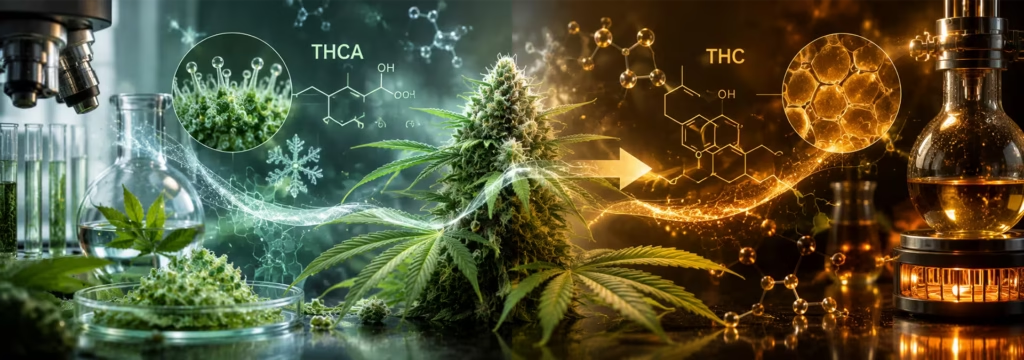
THCA is the acidic precursor to Delta-9 THC. The cannabis plant actually produces THCA first, not THC. THC only appears after THCA is exposed to heat or prolonged light. This process is called decarboxylation. Because raw cannabis contains mostly THCA rather than THC, understanding THCA is essential for reading any product label accurately.
THCA is one of the most abundant cannabinoids in a fresh cannabis plant. Scientists are actively researching it for potential therapeutic properties, including anti-inflammatory, neuroprotective, and anti-nausea effects though these benefits apply to the raw, non-converted form.
What Does THCA Stand For?
THCA stands for tetrahydrocannabinolic acid. The name follows the same pattern as THC (tetrahydrocannabinol). The key difference is the suffix “-ic acid,” which indicates that the molecule carries an extra carboxyl group (–COOH). That single chemical group is what makes THCA non-psychoactive and what gets removed when heat is applied during smoking, vaping, or cooking.
Does THCA Get You High?
No, THCA does not get you high in its raw, unheated form. Because the carboxyl group prevents THCA from binding efficiently to the CB1 receptors in the brain, consuming raw THCA (for example, by juicing raw cannabis leaves) produces no intoxicating effect.
The Important Caveat
When heat touches THCA through smoking, vaping, cooking, or prolonged sunlight, THCA converts to Delta-9 THC through decarboxylation. At that point, yes, it absolutely gets you high. So the statement “THCA doesn’t get you high” is only true for the raw, unheated compound. Light up a bowl of THCA flower and you will feel psychoactive effects, sometimes very strong ones, depending on the percentage.
THCA vs. THC: What Is the Difference?
THCA and THC share an almost identical molecular structure, but one extra carboxyl group changes everything. Here is a direct comparison:
| Feature | THCA | THC (Delta-9 THC) |
| Chemical state | Acidic; raw cannabinoid | Activated; decarboxylated form |
| Psychoactive? | No, not in raw form | Yes, produces a high |
| Found in | Raw cannabis and hemp flower | Heated or processed cannabis |
| Legal status (federal) | Legal under 2018 Farm Bill if Delta-9 THC < 0.3% | Federally illegal; state laws vary |
| Binds to CB1? | Weakly / not effectively | Yes, primary mechanism of high |
| Potential benefits | Anti-inflammatory, neuroprotective, anti-nausea (research ongoing) | Pain relief, appetite stimulation, relaxation |
| Best consumed | Raw, juiced, or as tincture for non-psychoactive use | Smoked, vaped, or in edibles |
The bottom line: THCA and THC are the same molecule at different stages of life. Heat is the bridge between them.
Is THCA Legal in 2026?
THCA is federally legal under the 2018 Farm Bill (Agriculture Improvement Act) when it is derived from hemp and the finished product contains less than 0.3% Delta-9 THC by dry weight. The federal legal threshold applies specifically to Delta-9 THC not to THCA itself, which is why high-THCA hemp products can be sold and shipped legally across most of the United States.
THCA Legal Status in California
California regulates both cannabis and hemp through the Department of Cannabis Control (DCC). In California, licensed dispensaries like Canna Lala in Los Angeles carry THCA products that comply fully with state and federal law. All products are third-party lab-tested and clearly labeled with cannabinoid percentages. If you are purchasing THCA products in California, always buy from a licensed retailer to ensure compliance and product safety.
Note: State laws evolve. Always confirm your local regulations before purchasing, particularly if you are outside of California.
What Is THCA Flower?
THCA flower is cannabis or hemp flower that has been cultivated to contain high levels of THCA while keeping Delta-9 THC below the federal 0.3% threshold. In appearance, aroma, and texture, THCA flower is essentially indistinguishable from traditional cannabis flower because it is a cannabis flower, harvested and dried before any significant decarboxylation occurs.
When you smoke or vape THCA flower, heat converts the THCA to THC in real time producing effects similar to or stronger than many dispensary cannabis products, depending on the THCA percentage. This is why THCA flower has become the preferred product for consumers in states with restrictive cannabis laws, and a popular choice for potency in states like California where full cannabis is already legal.
At Canna Lala in Los Angeles, our THCA flower selection includes premium indoor-grown strains with lab-verified cannabinoid profiles. Browse our flower collection on the Canna Lala product pages.
How Does THCA Convert to THC?
Decarboxylation is the chemical process that converts THCA into THC. The word sounds complex, but the mechanism is simple: heat removes the carboxyl group (–COOH) from the THCA molecule, transforming it into Delta-9 THC, the compound responsible for the psychoactive effects of cannabis.
How Much Heat Is Required?
Decarboxylation begins at around 220°F (104°C) and proceeds efficiently between 240–300°F (115–149°C). In practical terms, this means:
- Smoking — the combustion point of a flower (~400–700°F) instantly and fully decarboxylates THCA.
- Vaping — most vaporizers operate in the 350–430°F range, efficiently converting THCA to THC.
- Cooking / edibles — oven decarboxylation at 240°F for 30–40 minutes before infusion.
- Raw consumption — no heat means no conversion; THCA remains THCA and is non-psychoactive.
This is why the same flower produces very different effects depending on how you consume it. Raw in a smoothie? No high. Smoked in a joint? Full conversion to THC and a significant high.
How to Calculate Total THC from THCA: The 0.877 Formula
When THCA converts to THC, it does not do so at a 1:1 ratio. Because the decarboxylation process removes the carboxyl group, the resulting THC molecule weighs less than the original THCA molecule. The conversion factor is 0.877, meaning for every 1% of THCA, you get approximately 0.877% of THC.
The Formula
Total THC = (THCA% × 0.877) + Delta-9 THC%
Real-World Example: 1% THC + 22% THCA
Suppose you are looking at a THCA product label that reads:
- Delta-9 THC: 1%
- THCA: 22%
Plug those numbers into the formula:
Total THC = (22 × 0.877) + 1 = 19.29 + 1 = 20.29%
A product with 1% Delta-9 THC and 22% THCA will produce approximately 20.3% Total THC upon smoking or vaping. That is a potent product comparable to many high-THC dispensary flower options. The answer to the common question “Will I get high?” is an unequivocal yes.
What Are the Benefits of THCA?
Research into THCA’s potential therapeutic benefits is still early-stage, but the preliminary findings are promising. These benefits apply specifically to raw, non-decarboxylated THCA. Once THCA converts to THC, its properties change significantly.
Anti-inflammatory: A 2011 study published in Biological & Pharmaceutical Bulletin found that THCA showed significant anti-inflammatory activity, potentially useful for conditions like arthritis and inflammatory bowel disease.
Neuroprotective: Early research suggests THCA may help protect brain cells from damage of potential interest for conditions like Alzheimer’s and Parkinson’s disease.
Anti-nausea and appetite: THCA has shown anti-emetic (nausea-reducing) properties in animal studies, which could benefit patients undergoing chemotherapy.
Anti-proliferative: Some laboratory studies suggest THCA may inhibit the growth of certain cancer cells, though this research is very preliminary and not a basis for medical claims.
Important: These statements have not been evaluated by the FDA. THCA products are not intended to diagnose, treat, cure, or prevent any disease. Consult a healthcare professional before using cannabis products for health purposes.
How to Use THCA: Methods of Consumption
How you consume THCA determines your experience, especially whether decarboxylation occurs and how intense the effects feel,
Smoking THCA Flower: The most common method. Combustion instantly converts THCA to THC, delivering fast-onset psychoactive effects. Expect effects within minutes. Potency depends directly on the THCA percentage using the 0.877 formula to estimate Total THC.
Vaping THCA Flower or Concentrates: Vaporizers heat flower or concentrate to precise temperatures below combustion, converting THCA to THC efficiently. Vaping is generally considered smoother on the lungs than smoking. Browse Canna Lala’s vape selection at cannalala.com/vapes.
THCA Concentrates and Diamonds: THCA diamonds are ultra-pure crystalline THCA concentrate often 95–99% pure THCA. They are dabbed at high temperatures, instantly converting to THC for an extremely potent experience. Not recommended for beginners.
THCA Tinctures and Capsules: Sublingual tinctures taken raw (without heat) deliver THCA in its non-psychoactive form. Effects are mild and non-intoxicating, making this method popular for potential wellness use.
Raw Juicing: Juicing fresh, unheated cannabis leaves is a method used by some wellness advocates to consume THCA without any psychoactive effect. No conversion occurs because no heat is applied.
Edibles (Baked): If THCA flower or concentrate is used in baked goods, the oven heat decarboxylates the THCA to THC, meaning baked edibles are psychoactive and should be dosed carefully.
Topicals: THCA-infused topicals (creams, balms) are applied to the skin. Because they are not absorbed into the bloodstream in meaningful quantities, they do not produce a high; they are typically used for localized relief.
THCA Concentrates, Diamonds, and Vapes: A Quick Guide
Beyond flower, brands offer THCA in several concentrated and processed forms, and each form has distinct potency levels and use cases.
THCA Diamonds: Crystalline THCA that looks like small gems or powder. Purity levels reach 95–99%. Consumers usually dab or vape it. They do not consume it raw for psychoactive effects. Among the most potent cannabis products available.
THCA Live Resin: Extracted from fresh-frozen cannabis to preserve the full terpene and cannabinoid profile. Rich flavor, potent effect. Dabbed or vaped.
THCA Vape Cartridges: Pre-filled cartridges containing THCA oil (and terpenes), compatible with standard 510-thread batteries. Convenient and discreet.
THCA Disposable Vapes: All-in-one vapes with no cartridge swapping required. Ideal for on-the-go use. Check our current disposable selection at cannalala.com/vapes.
THCA Rosin: Solventless concentrate made by applying heat and pressure to flower or hash. Cleaner extraction process, no solvents involved. Popular with health-conscious consumers.
Frequently Asked Questions
What is THCA?
THCA (tetrahydrocannabinolic acid) is the non-psychoactive acidic precursor to THC found naturally in raw cannabis and hemp plants. It does not produce a high until exposed to heat, which converts it to Delta-9 THC through decarboxylation.
What does THCA stand for?
THCA stands for tetrahydrocannabinolic acid. The name reflects its chemical structure: it is the same as THC (tetrahydrocannabinol) but with an extra carboxyl group (-COOH) attached, which is removed by heat.
Is THCA the same as THC?
No. THCA and THC share a similar molecular structure, but they are chemically distinct. THCA is the raw, acidic form found in the live plant; THC is the activated, decarboxylated form that produces psychoactive effects. Heat is required to convert one into the other.
Does THCA get you high?
In its raw, unheated form, No. Raw THCA is non-psychoactive. However, when THCA flower is smoked, vaped, or baked, the heat converts it to Delta-9 THC, which does produce a high. A product labeled 22% THCA will be very potent when smoked.
Is THCA legal in California in 2026?
Yes. THCA flower derived from hemp and containing less than 0.3% Delta-9 THC by dry weight is federally legal under the 2018 Farm Bill. California also permits the sale of THCA products through licensed dispensaries regulated by the Department of Cannabis Control. Always purchase from a licensed retailer like Canna Lala to ensure compliance.
What is THCA flower and why is it legal?
THCA flower is hemp flower selectively bred to contain high THCA levels while keeping Delta-9 THC below 0.3% the federal legal limit. Because the law tests for Delta-9 THC specifically (not THCA), these products are federally compliant. When smoked or vaped, THCA converts to THC and produces strong psychoactive effects.
If a product has 1% THC and 22% THCA, will I get high?
Yes, significantly. Using the conversion formula (Total THC = THCA × 0.877 + Delta-9 THC), the total psychoactive potential is (22 × 0.877) + 1 = 20.3% Total THC. That is a highly potent product. Start with a small amount if you are new to cannabis.
How do I read THCA percentages on a label?
Look for both the THCA% and the Delta-9 THC% on the lab report or product label. Apply the formula: Total THC = (THCA% × 0.877) + Delta-9 THC%. This gives you the actual psychoactive potency you will experience when smoking or vaping the product.
What is THCA vs. THC — which should I buy?
It depends on your goal. If you want psychoactive effects (a high), both work, THCA flower converts to THC when smoked. If you want potential non-psychoactive wellness benefits, raw THCA products (tinctures, juicing, capsules) are the better choice. Discuss your goals with the staff at Canna Lala for a personalized recommendation.
Where can I buy THCA flower near me in Los Angeles?
Canna Lala is a premium licensed cannabis dispensary in Los Angeles, California, carrying a curated selection of THCA flower, concentrates, vapes, and more, all lab-tested and state-compliant. Visit cannalala.com or stop by our Los Angeles location.
What are THCA diamonds and how are they used?
THCA diamonds are crystalline THCA extract with purity levels of 95–99%. They look like small crystals or powder. Users must dab or vape diamonds to convert THCA to THC. Consuming them raw has no psychoactive effect. They are among the most potent cannabis products available and are not recommended for beginners.
Can THCA show up on a drug test?
Yes. Drug tests screen for THC metabolites. When THCA converts to THC in your body (even partially), it produces the same metabolites that drug tests detect. If you are subject to drug testing, avoid THCA products in any heated form and consult your employer or testing program guidelines before use.
Where to Buy THCA Flower Near You in Los Angeles, California
If you are searching for THCA flower, THCA concentrates, or THCA vapes in Los Angeles, Canna Lala is your go-to destination. As a licensed premium cannabis dispensary in LA, we carry a carefully curated lineup of THCA products — all backed by third-party Certificates of Analysis (COA) so you know exactly what you are getting.
- Lab-tested and COA-verified — every product comes with full cannabinoid and contaminant testing.
- Premium indoor THCA flower strains with clearly labeled THCA and Delta-9 THC percentages.
- Wide range of THCA formats: flower, diamonds, live resin, vape cartridges, disposables, and rosin.
- Knowledgeable staff who can walk you through the 0.877 formula, strain selection, and dosing.
- Fully licensed and compliant with California Department of Cannabis Control regulations.
Ready to find the right THCA product for you? Visit cannalala.com to browse our current inventory. Our team is here to make sure you find exactly what you are looking for, whether you are a first-time cannabis consumer or an experienced connoisseur.