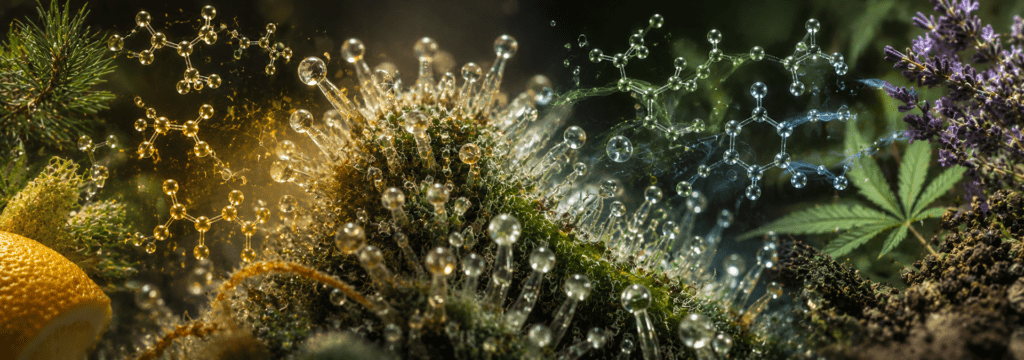
Cannabis terpenes are the aromatic compounds naturally produced by the cannabis plant that give each strain its distinct smell and flavor, including earthy, skunky, citrusy, and piney notes. They’re found in the same tiny resin glands (trichomes) that produce THC and CBD. Terpenes do more than make your weed smell good. They interact with cannabinoids to shape the kind of experience you have.
If you’ve ever wondered why one strain chills you out completely while another with the same THC percentage has you wanting to clean the entire house, terpenes are a big part of the answer. In this cannabis terpenes explained guide, we break down exactly what terpenes are, which ones matter most, how they work with THC and CBD, and how to use terpene profiles to shop smarter when you order from Canna Lala.
What Are Terpenes?
Terpenes are organic compounds found in countless plants, including lavender, pine trees, citrus fruit, black pepper, and cannabis. They’re responsible for the unique scents and flavors of plants. They have evolved largely as a defense mechanism against pests and environmental threats.
In cannabis specifically, terpenes are produced in the trichomes, the tiny, hair-like crystals that coat the surface of the flower. The same glands that make THC and CBD also produce terpenes. Curing, storage temperature, and harvest timing can all affect the terpene profile of a batch.
Here’s the key thing most people miss: terpenes aren’t just about aroma. Research suggests they interact directly with your endocannabinoid system and may influence how you feel, how alert you are, how relaxed your body gets, and even how effectively cannabinoids like THC are absorbed.
One important distinction: terpenes are not cannabinoids. THC and CBD bind to receptors in your brain and body; terpenes work differently, often by modulating those same receptors or working through other pathways. They do not work in isolation. Together, cannabinoids and terpenes create what researchers call the “entourage effect” (more on that below).
Most Common Cannabis Terpenes and Their Effects
Not all terpenes are created equal when it comes to cannabis. Some show up in trace amounts; others dominate the profile and noticeably influence the experience. Here are the five you’ll encounter most often. and what they actually do.
| Terpene | Aroma | Also Found In | Effects | Best For |
| Myrcene | Earthy / Musky | Mangoes, hops, lemongrass | Sedating, muscle relaxation, intensifies THC effects | Sleep, deep relaxation, body relief |
| Limonene | Citrus / Bright | Lemons, oranges, limes | Mood-lifting, energizing, stress and anxiety relief | Stress, anxiety, mood boost |
| Caryophyllene | Spicy / Peppery | Black pepper, cloves, basil | Anti-inflammatory, pain relief, calming without sedation | Chronic pain, stress, inflammation |
| Linalool | Floral / Lavender | Lavender, birch, rosewood | Calming, sedating, anti-anxiety, anti-convulsant | Anxiety, insomnia, PTSD |
| Pinene | Pine / Fresh | Pine trees, rosemary, dill | Alertness, memory retention, bronchodilator, anti-inflammatory | Focus, inflammation, daytime use |
Myrcene
Myrcene is the most abundant terpene in most commercial cannabis strains. It can sometimes make up more than 50% of the total terpene profile. It is strongly associated with the classic “couch-lock” effect, partly because it is believed to increase the permeability of the blood-brain barrier, potentially allowing cannabinoids to take effect more quickly and intensely. High-myrcene strains tend to be heavier and more physical. If you are ordering from our flower menu and want something for nighttime use or serious relaxation, look for strains with myrcene as the dominant terpene.
Limonene
Limonene is your daytime friend. Its bright, citrusy aroma is instantly recognizable, and users consistently report feeling more uplifted, creative, and stress-free with limonene-forward strains. It’s also been studied for potential anti-anxiety and antidepressant properties. You’ll find it in many sativa-leaning strains and in some concentrates where the terpene profile has been preserved through live resin extraction.
Caryophyllene
Caryophyllene is unique among cannabis terpenes because it is also a dietary cannabinoid. It is the only terpene known to bind directly to CB2 receptors in the endocannabinoid system. That makes it particularly interesting for people seeking anti-inflammatory and analgesic effects without heavy psychoactive impact. It adds a spicy, peppery edge to a strain’s flavor and pairs well with both indica and sativa profiles. It is a strong option for people managing chronic pain or stress who still need to function.
Linalool
If you’ve ever used lavender essential oil to calm down, you already know linalool. In cannabis, it produces a deeply calming, almost sedative effect that’s especially useful for anxiety and sleep issues. Linalool-heavy strains often have a soft, floral aroma that’s noticeably different from the more pungent earthy or skunky profiles. It’s a go-to terpene for users dealing with insomnia, generalized anxiety, or wanting to decompress after a stressful day.
Pinene
Pinene is split into two forms, alpha-pinene and beta-pinene. Both share that clean, refreshing pine scent. Pinene stands out for its potential to counteract some of THC’s short-term memory effects. Pinene-dominant strains often feel more “clear-headed” despite being potent. It is also a bronchodilator, meaning it may help open airways, which is relevant for anyone consuming via vape or flower. Pinene is a great match for daytime productivity and focus-oriented sessions.
How Terpenes Create the “Entourage Effect”
The entourage effect is the idea that cannabis compounds, including cannabinoids like THC and CBD, terpenes, and other minor compounds, work better together than any single compound does in isolation. Think of it like a band: the lead singer (THC) is the star, while the backing musicians (terpenes, CBD, minor cannabinoids) shape the entire sound of the song.
This is the main reason whole-plant and full-spectrum products tend to produce richer, more nuanced effects than isolates. A pure THC distillate gives you THC and nothing else. There is no terpene modulation, CBD balance, or entourage. A live resin concentrate is extracted from fresh-frozen flower specifically to preserve the full terpene profile alongside the cannabinoids. The result is a product that more closely mimics the effect of smoking the original flower.
Two strains can have the exact same 25% THC percentage and feel completely different. One might leave you locked to the sofa; the other might have you energized and sociable. The difference goes beyond THC. It lies in the terpene profile, the ratio of minor cannabinoids, and how all those compounds interact once they enter your system.
When you’re browsing Canna Lala’s live resin section, you’re looking at products specifically designed to maximize the entourage effect. Live resin is flash-frozen immediately after harvest to lock in terpenes before they degrade. This creates a far more complete and true-to-flower experience than distillate-based vapes where terpenes are added back in artificially after extraction.
How to Find Terpene Info on a Cannabis Product Label
California’s licensed cannabis products are required to include specific lab-tested information on their packaging. Here’s what to look for when you receive your Canna Lala delivery order.
- Dominant Terpene: Many products will list the single terpene present in the highest percentage. This is your quickest shortcut to predicting the experience.
- Terpene Profile or Full Terpene Panel: Higher-end products, especially live resins and rosin, will list all detectable terpenes with their percentages.
- COA (Certificate of Analysis): This is the full third-party lab test report. Licensed California products are tested by ISO-accredited labs, and the COA shows you exact terpene percentages, cannabinoid percentages, and confirms there are no pesticides or heavy metals.
- QR Code: Most licensed products include a QR code on the label that links directly to the COA on the testing lab’s website. Scan it to get the full picture before you consume.
When reading a COA, terpene percentages are typically shown as a percentage of total weight. A terpene percentage above 1% is considered relatively high; most flower sits between 0.5% and 3% total terpenes. The “dominant terpene” is simply whichever one has the highest individual percentage. that one tends to have the most noticeable influence on your experience.
Choosing Cannabis by Terpene Profile (Not Just Indica/Sativa)
The indica vs. sativa framework is outdated. Decades of crossbreeding have blurred any meaningful genetic distinction between the two categories. Most products on the market today are hybrids, and the physical structure of the plant (bushy vs. tall) tells you almost nothing about how a strain will make you feel.
Terpene profiles are a far more reliable predictor of effects. Instead of asking “is this indica or sativa?” try asking: “what are the dominant terpenes?”
Here’s a quick-reference guide to help you choose:
| Your Goal | Look For | Why It Works |
| Sleep & Deep Relaxation | High Myrcene + Linalool | Myrcene sedates; linalool calms anxiety. Together they’re a natural sleep stack. |
| Energy & Creativity | High Limonene + Pinene | Limonene lifts mood; pinene keeps your head clear. Both are cerebral and uplifting. |
| Pain & Inflammation Relief | High Caryophyllene (+ CBD if available) | Caryophyllene binds CB2 receptors directly; great for body-focused relief without heavy sedation. |
When you browse the Canna Lala LA delivery page, you can filter by product type and check descriptions for terpene callouts. Our team curates product notes to help you identify the right profile for your needs across Los Angeles, Hollywood, Burbank, Glendale, Santa Clarita, North Hollywood, Rancho Cucamonga, Riverside, Lancaster, Palmdale, Victorville, and our other delivery areas.
Frequently Asked Questions
Q: What are cannabis terpenes?
A: Cannabis terpenes are aromatic compounds found in the resin glands of the cannabis plant. They give each strain its unique smell and flavor, and they interact with cannabinoids like THC and CBD to influence the type of experience you have. Over 200 different terpenes have been identified in cannabis.
Q: Do terpenes get you high?
A: Terpenes on their own do not produce a traditional psychoactive “high.” THC binding to cannabinoid receptors causes that effect. Terpenes can still influence your overall experience by modulating how cannabinoids affect you, including mood, energy, and physical sensations. Some terpenes, like myrcene, are believed to enhance THC’s effects. Others, like pinene, may provide a counterbalancing clarity.
Q: What terpene is best for anxiety?
A: Linalool and limonene are generally considered the top choices for anxiety. Linalool (found in lavender and many indica-leaning strains) has strong calming, anti-anxiety properties. Limonene offers a lighter mood-lift that can ease stress without heavy sedation. Caryophyllene is also worth considering because it binds directly to CB2 receptors and has demonstrated anti-anxiety effects in research.
Q: What terpene is best for sleep?
A: Myrcene is the most well-known sleep-supporting terpene. High-myrcene strains are consistently associated with sedation and body relaxation. Pairing myrcene with linalool gives you a double layer of sleep support: myrcene for the physical heaviness and linalool for calming the mental chatter. Look for strains where both appear in the top terpene slots.
Q: Are terpenes safe to vape?
A: Licensed California cannabis products sold by Canna Lala have been third-party lab tested, which includes confirming terpene content and the absence of harmful additives. Natural cannabis terpenes at the concentrations found in flower and quality concentrates are generally considered safe. Avoid products with unlicensed, untested terpene additives or cutting agents. Stick to licensed products. The lab test is your protection.
Q: What’s the difference between natural and added terpenes?
A: Natural terpenes are preserved through the extraction process. Live resin and live rosin are prime examples, extracted from fresh-frozen cannabis to capture the full terpene spectrum of the original plant. Added terpenes are reintroduced after extraction, either from cannabis sources (cannabis-derived terpenes) or from non-cannabis botanicals (botanically derived terpenes). Both can be safe and effective. Natural, cannabis-derived terpene profiles are generally considered more complete and true to the entourage effect.
Q: Why does cannabis smell like pine / citrus / skunk?
A: Those distinct aromas come directly from the terpene profile. Pine smell = high pinene content. Citrus = limonene dominant. The classic “skunk” or funky diesel smell is associated with sulfur compounds and high myrcene content, sometimes alongside terpinolene or ocimene. Smelling a product before consuming gives you a preview of its terpene profile and a rough preview of its likely effects.
Order Smarter With Canna Lala
Understanding terpenes changes the way you shop for cannabis. Instead of guessing based on indica/sativa labels or THC percentage alone, you can look at the terpene profile. This helps you make a genuinely informed choice about what you’re bringing into your body and what kind of experience you want to have.
Canna Lala delivers licensed cannabis products across Los Angeles, Hollywood, Burbank, Glendale, Santa Clarita, North Hollywood, Rancho Cucamonga, Riverside, Lancaster, Palmdale, Victorville, and dozens of surrounding communities. Browse our flower menu and live resin section for products with full terpene breakdowns. Reach out to our team if you have questions about what’s right for you.